
The complete guide
How to Choose a Convertible Gym Bag That Actually Fits Your Week
The problem with most gym bags
Nearly everyone starts with a cheap holdall. It works for about three weeks. Then you discover the things a plain duffle does badly, and once you notice them you cannot stop noticing.
Shoes go in with your clothes. You get home and your shirt smells like the gym floor. There is no sensible place for a wet towel, so it sits in a plastic bag you keep forgetting to take out. The single zip means everything lands in one heap, and finding your keys turns into an excavation. Then there is the carrying. A duffle is fine for the walk from the car park to the door, but if you are on a bike, a bus or a twenty minute walk, one strap digging into your shoulder gets old fast.
A convertible gym bag solves those problems by giving things their own homes and giving you a choice about how you carry it. That is really all it is. No clever gimmick, just better organisation and a few extra straps.
How a 3-in-1 duffle backpack works
The core idea is simple. One bag, several carry modes.
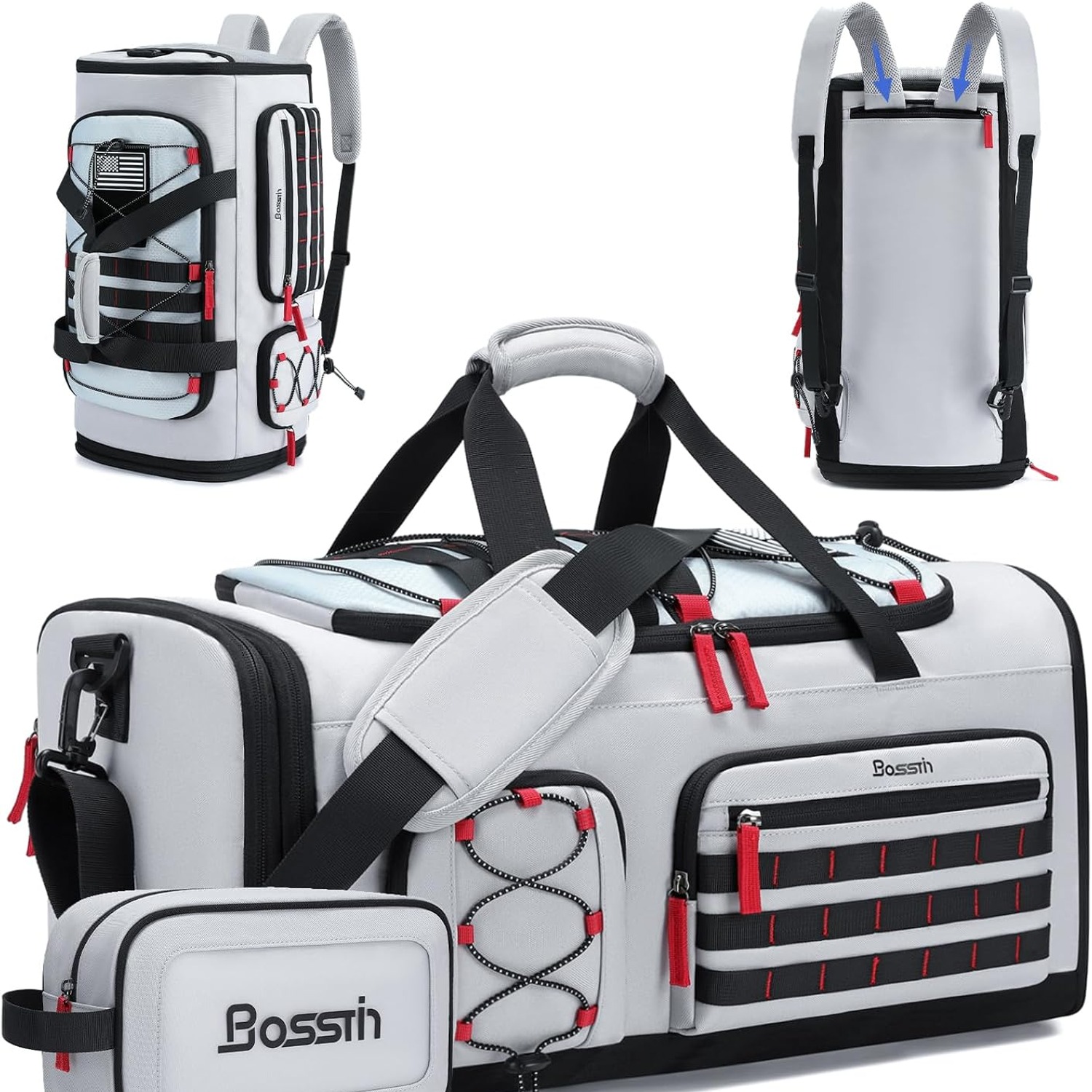
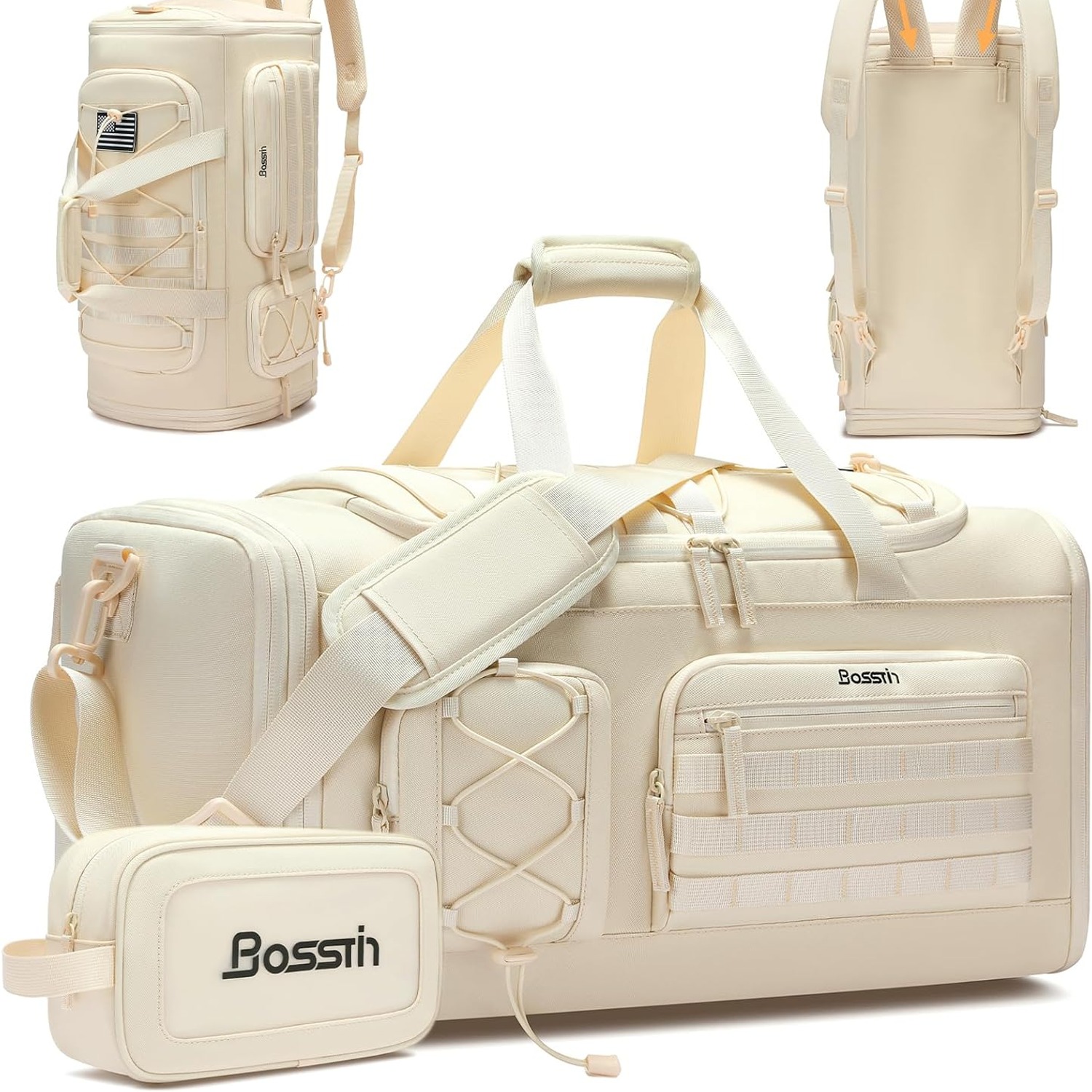
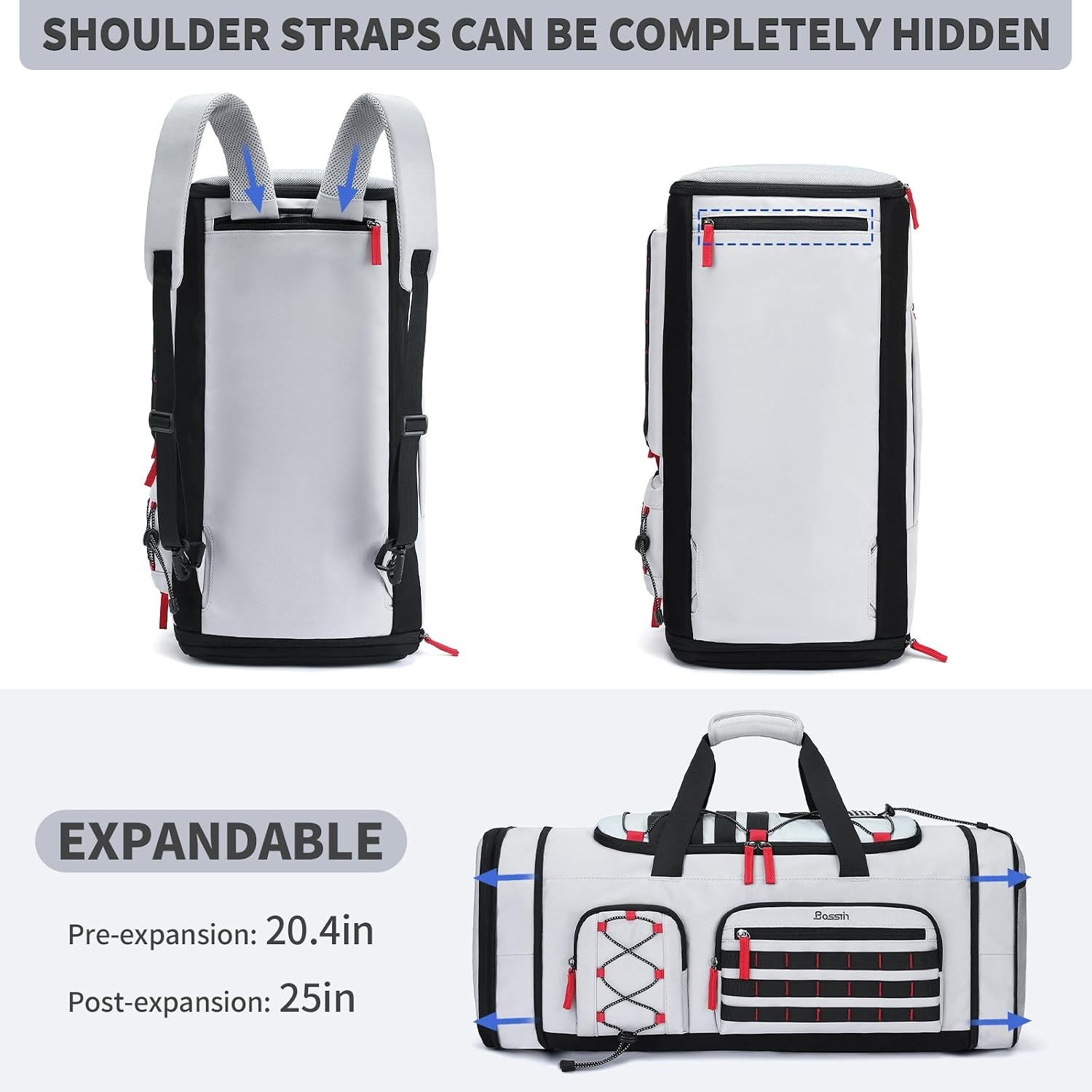
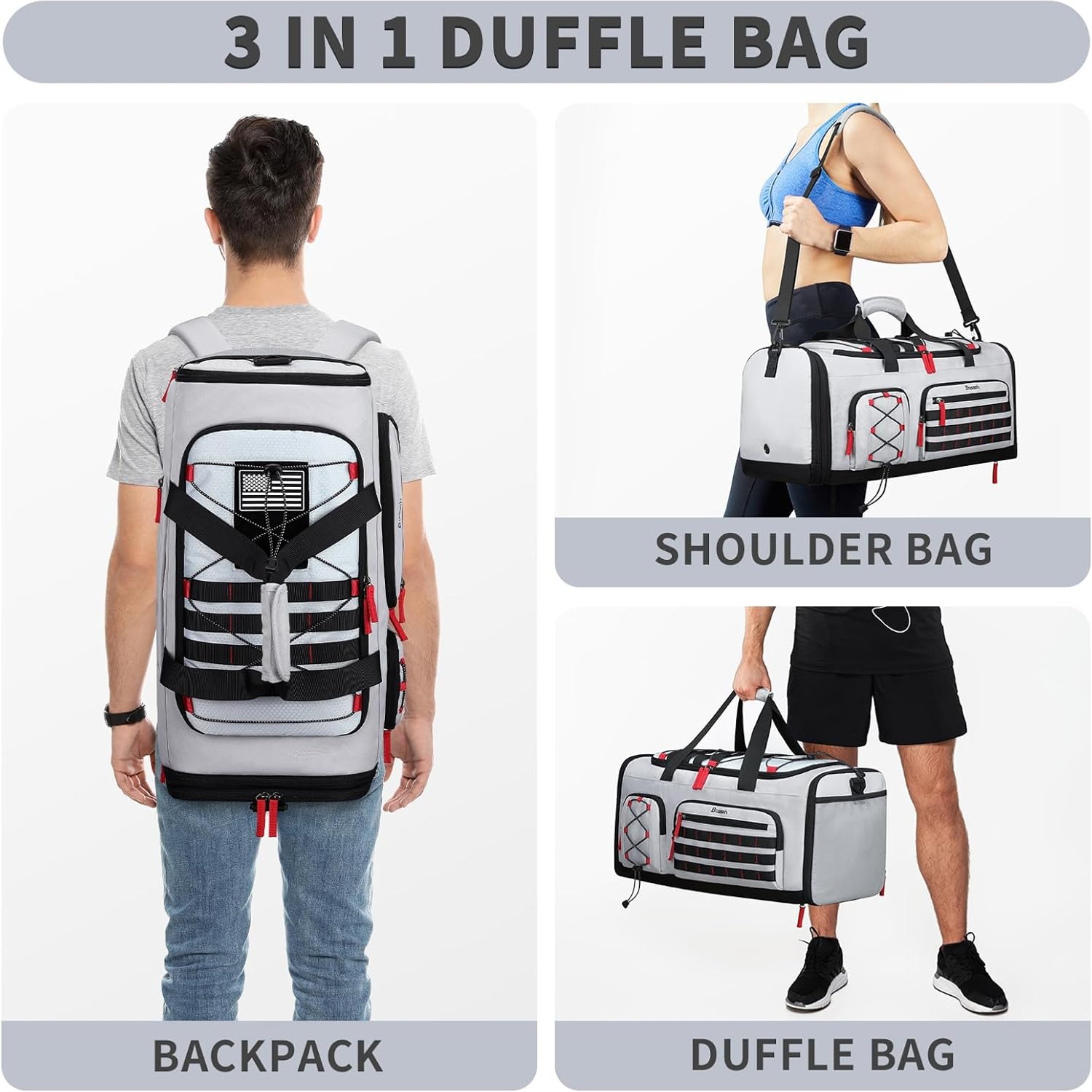
You have padded double handles on top for a classic duffle grip. You have a shoulder harness so it rides on your back when your hands are busy or the walk is long. There is a removable crossbody strap that tucks away when you are not using it, which keeps it from flapping around a changing room. And there is a grab handle on the side, which sounds minor until you are in a public toilet looking for somewhere to hang a bag that is not the floor.
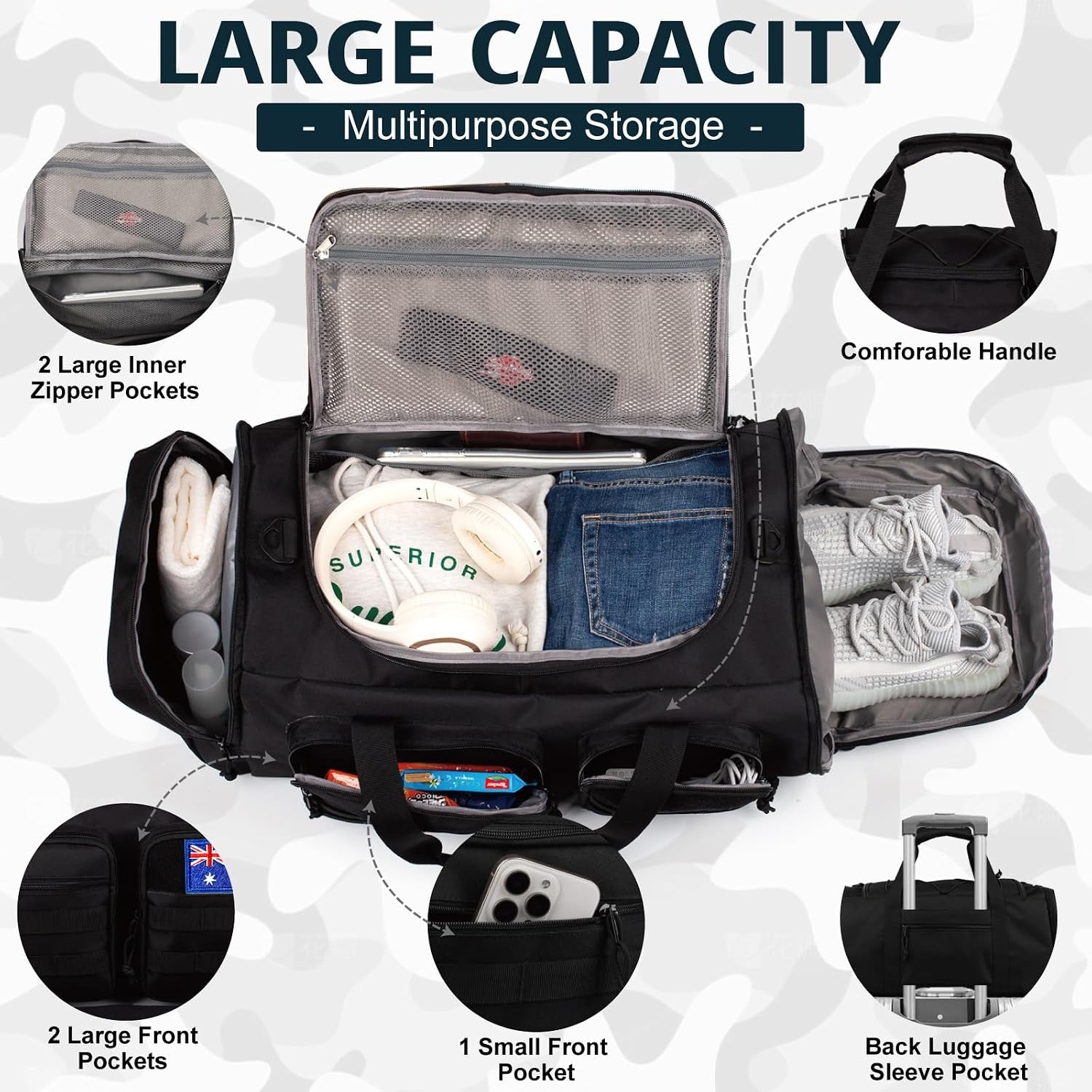
Underneath that, the layout does the work. This one has ten compartments. The main space is the 50 litre body, with two mesh pockets inside so small things stay visible. Three pockets on the front take the stuff you want fast, like a wallet, charger or gym pass. Then the two side pockets, which are the real difference between a good sports duffle bag and a sack with a zip.
One side is a shoe compartment with a ventilation hole. Trainers go in there, sealed off from clean kit, with air moving through so odours do not settle. The other side is a wet pocket lined with high-density PEVA. A damp towel or a swimsuit goes in and the moisture stays put. If you swim, train outdoors or just sweat a lot, those two pockets save you doing laundry you did not plan on.
Round the back there is a sleeve that slides over a suitcase handle. That turns the bag into a travel companion rather than something you have to wrangle through an airport with one spare hand.
Who this suits
This is a good fit if your week has more than one shape to it.
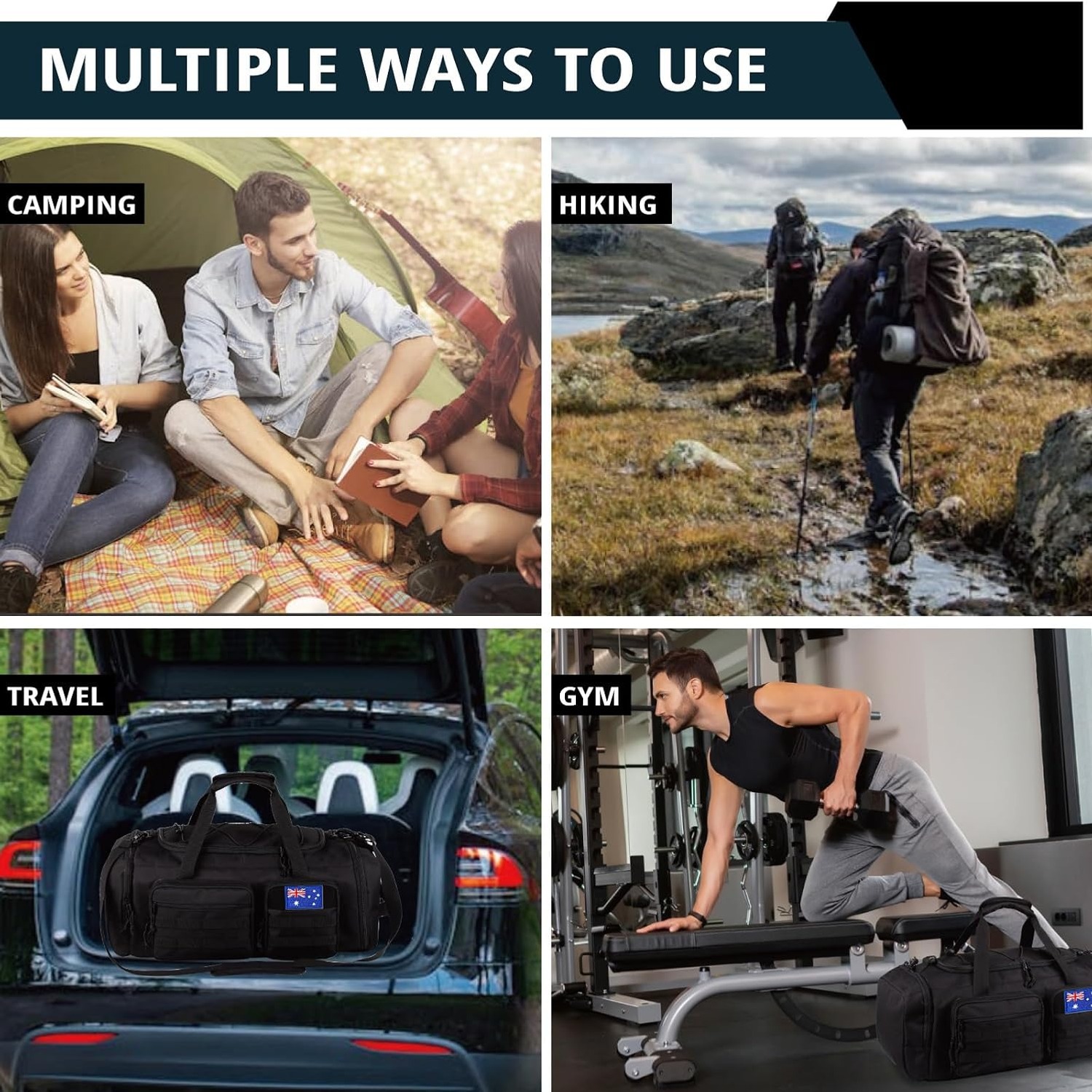
If you cycle or walk to the gym, the backpack mode matters more than you think. Fifty litres of kit on one shoulder for fifteen minutes is unpleasant. Across your back it is barely noticeable.
If you travel for work, the luggage sleeve and the 50 litre size make it a workable second bag. A lot of people end up using something like this as a best carry on duffle bag, with a roller case underneath and this on top.
If you have kids in sport, the shoe and wet pockets earn their keep every single weekend. Muddy boots go in one side, a soaked kit in the other, and the car stays liveable.
If you only ever drive to a gym five minutes away and carry a t-shirt and shorts, this is more bag than you need. There is no shame in that. Buy something smaller.
How to choose the right size and style
Capacity is where people get it wrong most often, usually by going too big. Fifty litres is a medium-to-large duffle. It handles a full gym kit with room spare, or two to three nights of clothes for most packers. Go bigger and you tend to fill the space with things you do not need, then carry the weight.
Think about depth as much as volume. This bag measures 30 x 33 x 11 cm folded. Packed, it gains depth. If cabin baggage matters to you, check that packed depth against your airline's sizer rather than trusting a volume figure. Airlines measure boxes, not litres.
Material is the next thing. Polyester is the standard for a reason. It takes scuffs, resists creasing and dries out quickly. The water-resistant finish here means light rain beads off rather than soaking through. It is not a dry bag, so if you are regularly out in heavy weather, plan for a cover or a waterproof liner for anything sensitive.
Then there is the look. This one is listed as tactical, which means webbing on the front pockets and a flag patch panel. Some people love it. Some find it too militaristic for a meeting. It is worth being honest about where the bag will be seen. Black keeps it fairly neutral either way.
Finally, check the hardware. Zips and handles fail before fabric does on almost every bag. Web handles and zip closures are the normal, sensible setup. Treat them well, do not overfill past the point where zips strain, and they last.
Packing it properly
A good layout only works if you use it. Here is the order that tends to work best.
Shoes go in the vented side pocket first, soles down, laces tucked. Wet or damp items go straight into the PEVA-lined pocket, not into a carrier bag inside the main compartment. Heavier items, like a water bottle or a laptop in a sleeve, sit low and against your back if you are using backpack mode. That keeps the load close to your spine and stops the bag pulling backwards. Clothes fill the remaining space and soften the shape.
Keys, cards and anything you want in under three seconds go in the front pockets. Resist the urge to put them in the main compartment "just for now". That is how you end up patting yourself down in a car park.
Looking after it
Care is undramatic. Spot clean with warm water and a mild detergent, then air dry fully before you put it away. Skip the washing machine, the tumble dryer and the iron. A machine wash can wreck the water-resistant finish and distort the structure.
The habit that matters most is emptying it. Take the shoes out, take the wet pocket contents out, and leave the zips open overnight. Almost every complaint about a smelly bag traces back to kit left sitting inside for a few days. Give it twenty seconds of attention and the problem never starts.
Store it loosely packed rather than crushed under other luggage. Folded flat for months, soft bags develop creases in awkward places.
The short version
A convertible gym bag is worth it when you need one bag to do several jobs. This one carries four ways, has ten compartments including a ventilated shoe pocket and a lined wet pocket, and holds 50 litres in a water-resistant polyester shell that weighs 1 kg empty. The rear sleeve makes it a decent travel bag on top of being a gym bag.
If you want separation between clean clothes, dirty shoes and wet towels, plus the option to put it on your back when the walk gets long, this covers it. If you carry very little and never travel, something smaller will serve you better. Measure what you actually pack, then decide.