
The complete guide
How to Choose a Gym Duffle Bag That Actually Works
The problem with most gym bags
Walk into any change room and watch what people do. Someone unzips a bag, pulls out a towel, a shirt, a hoodie and a bottle, piles them on a bench, finds their shoes at the bottom, then repacks the whole lot. It takes three minutes and ends with everything creased.
The root cause is simple. Most cheap sports bags are one big tube with a zip across the top. There is no system, so everything mixes. Dirty soles rest on clean cotton. A damp towel sits against your work shirt. By the time you get home the whole bag smells faintly of a locker room, and that smell never fully leaves.
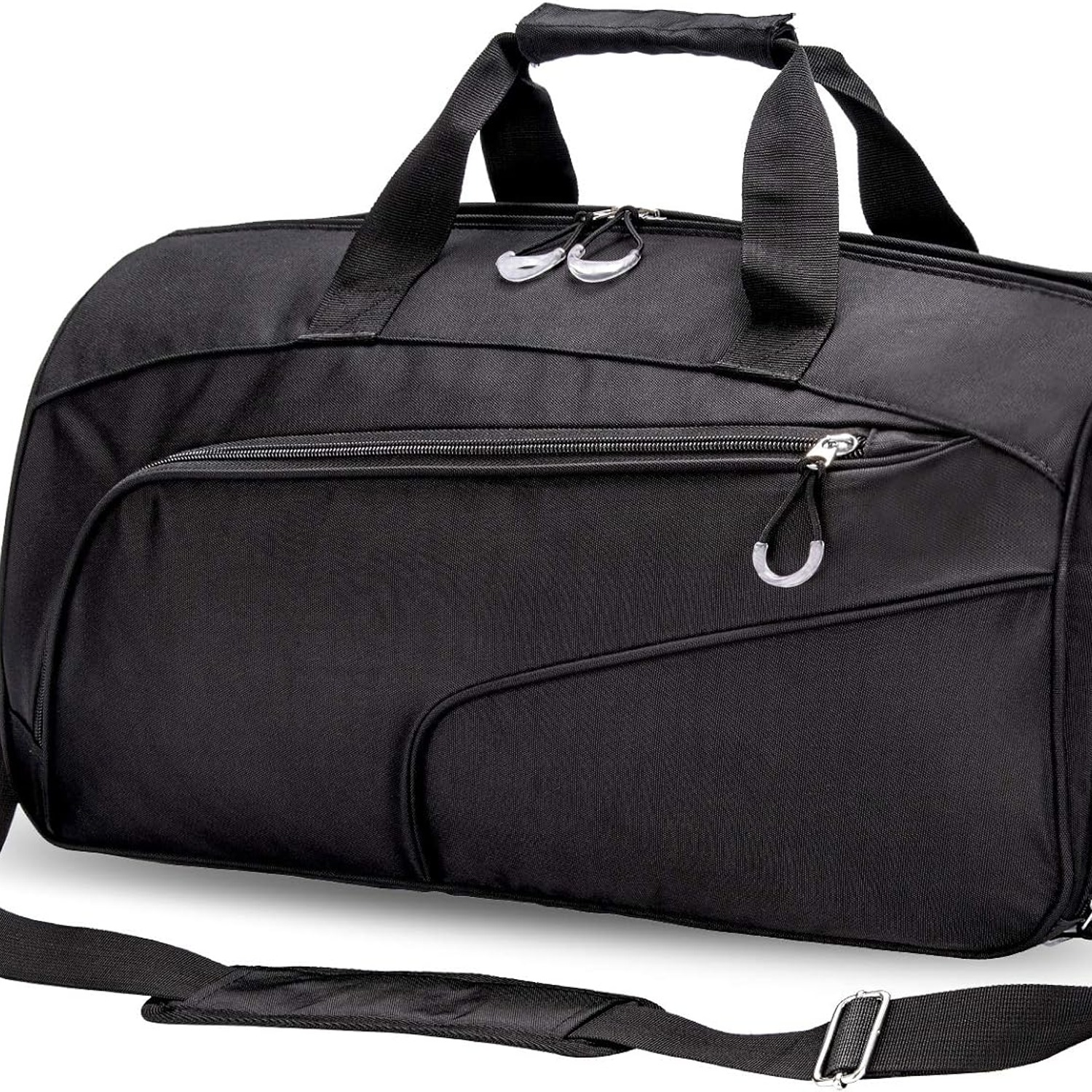
A gym duffle bag with a shoe compartment fixes the single biggest source of that mess. It separates the dirty part of your kit from the clean part, and it does it without you having to think about it.
How the shoe compartment changes things
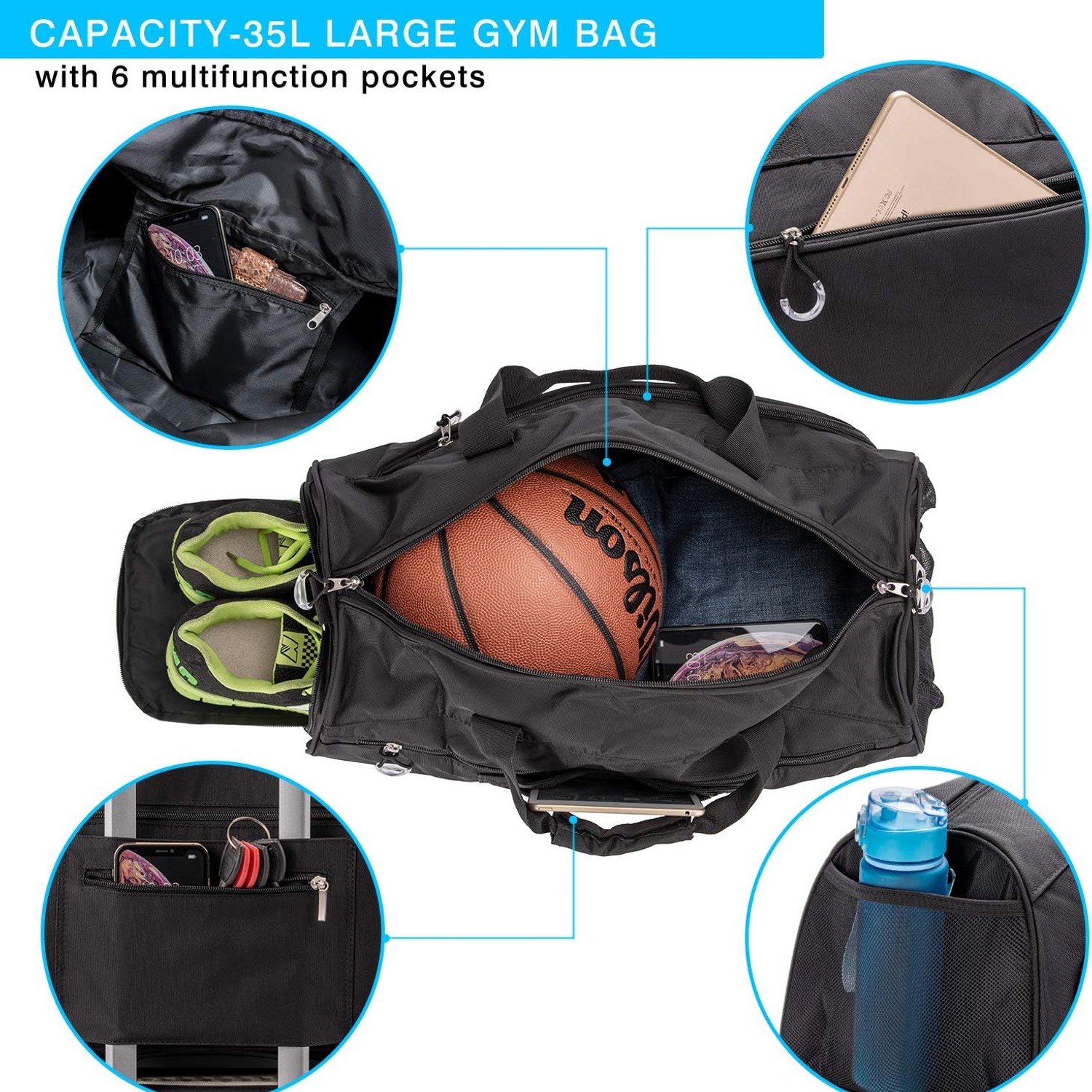
The idea is not complicated. Instead of one cavity, the bag has a second, isolated section sized for a pair of adult trainers. Shoes go in there. Everything else goes in the main compartment. The two do not touch.
What this buys you is more than cleanliness. It buys speed. When shoes have a fixed home, you stop rearranging the bag to make room for them. You slide them in, zip it, go. Over a year of training that adds up to a lot of saved fiddling.
It also helps with drying. Damp shoes trapped against folded clothes stay damp. Shoes in their own section, with the bag left open at home, dry far faster. If you swim or train outdoors, that difference is obvious within a week.
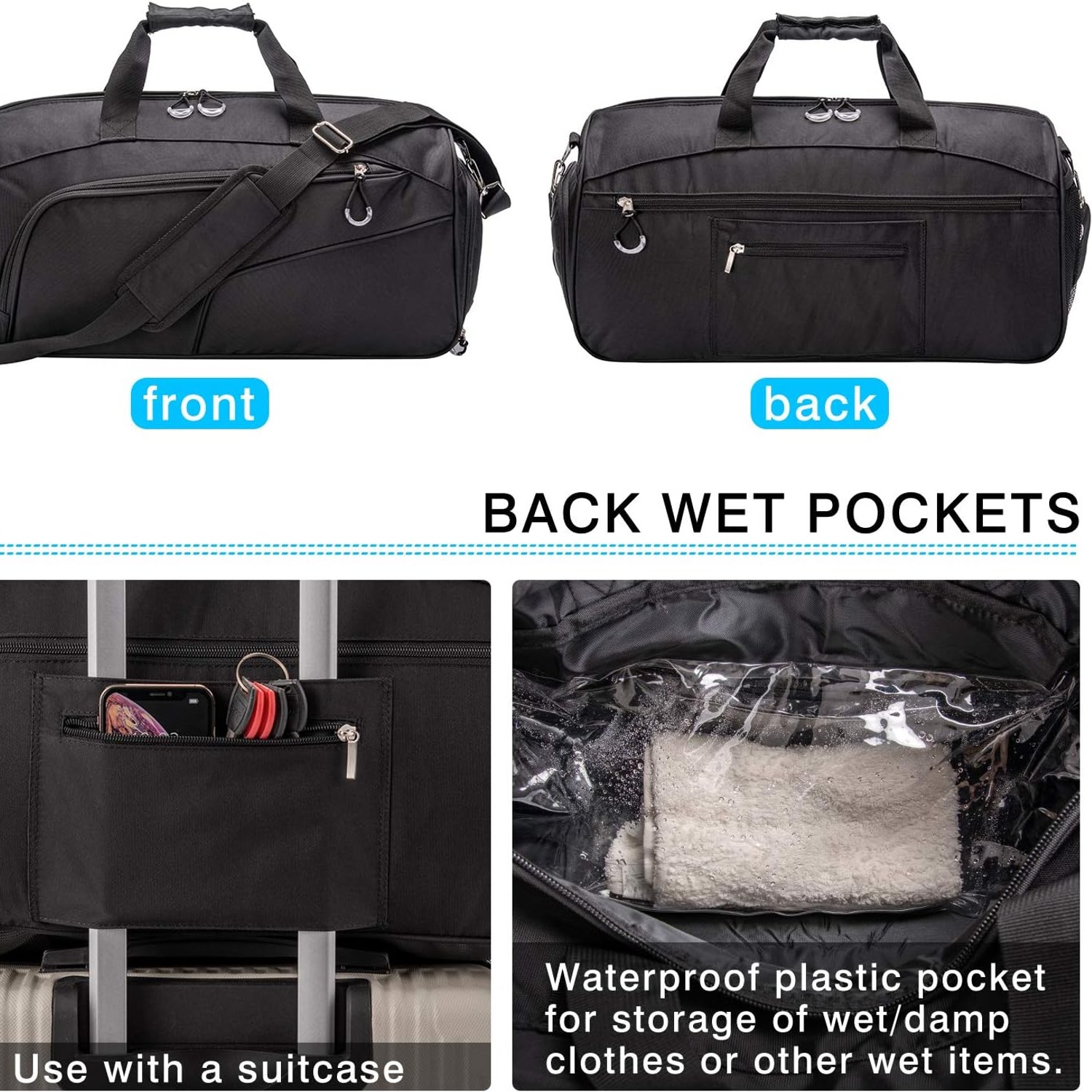
The same compartment doubles as a wet pocket. Togs, a used towel, muddy socks: anything you do not want touching clean kit can live there until you get home. It is the most useful feature in a sports bag with shoe compartment, and it is the reason this style has largely replaced the plain holdall for daily training.
Who this size suits
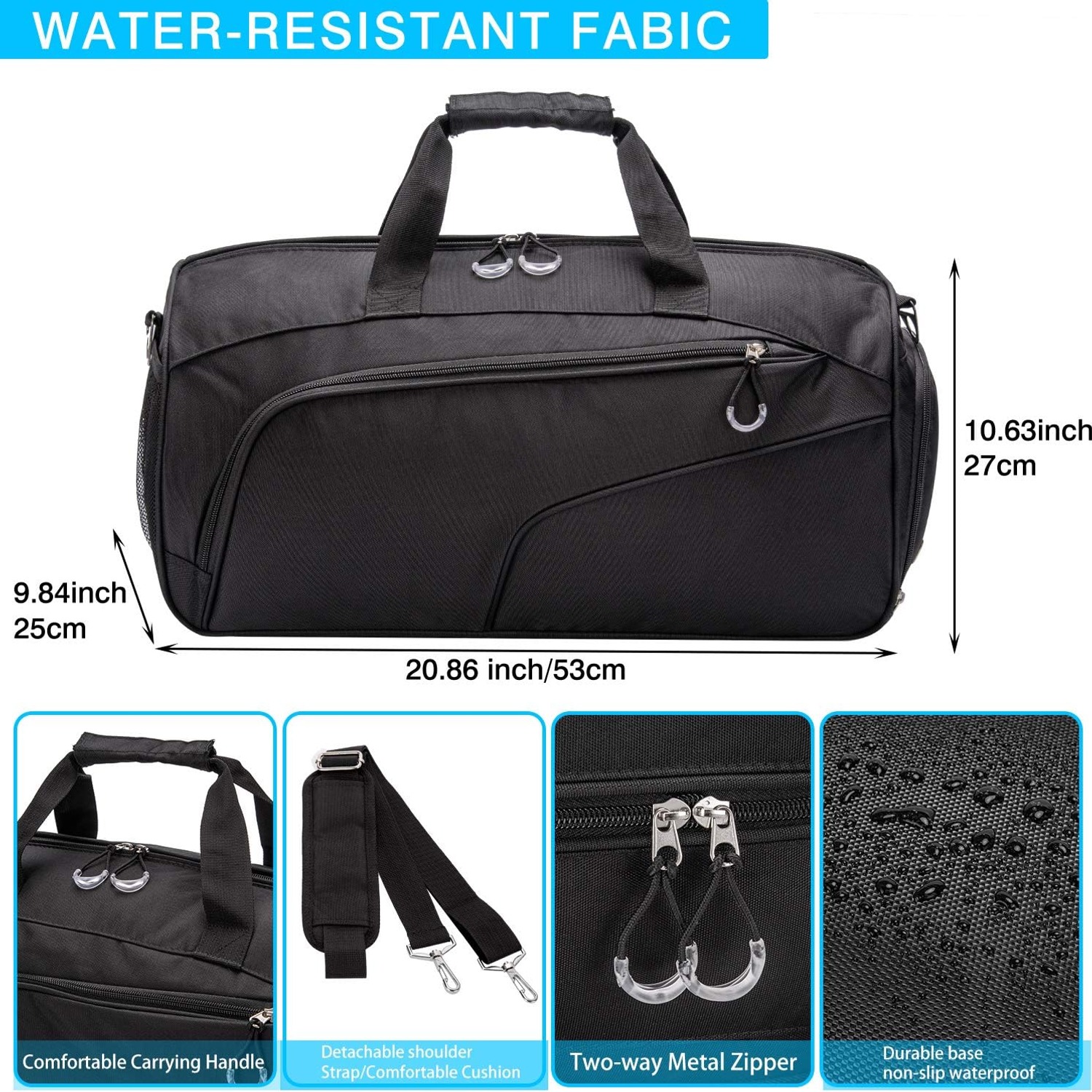
This is a mid sized duffle. It is built for a normal session, not for hauling a full equipment set across a country.
It suits you well if you train three or four times a week and carry shoes, a change of clothes, a towel, a bottle and small gear. It also works as a work to gym bag, where you need office clothes in one section and trainers in the other for a single trip out of the house.
It doubles as a weekender duffle bag. A one or two night trip needs roughly the same volume as a gym session with a spare outfit, which is why the categories overlap so neatly. Plenty of people buy it for the gym and end up using it most for short stays with family.
Where it is less suited: team equipment runs, week long trips, or anyone carrying bulky protective gear. If you need to move pads, helmets and multiple pairs of shoes at once, look at something considerably larger. A bag you have to force closed will fail at the zip eventually.
Choosing between carry styles
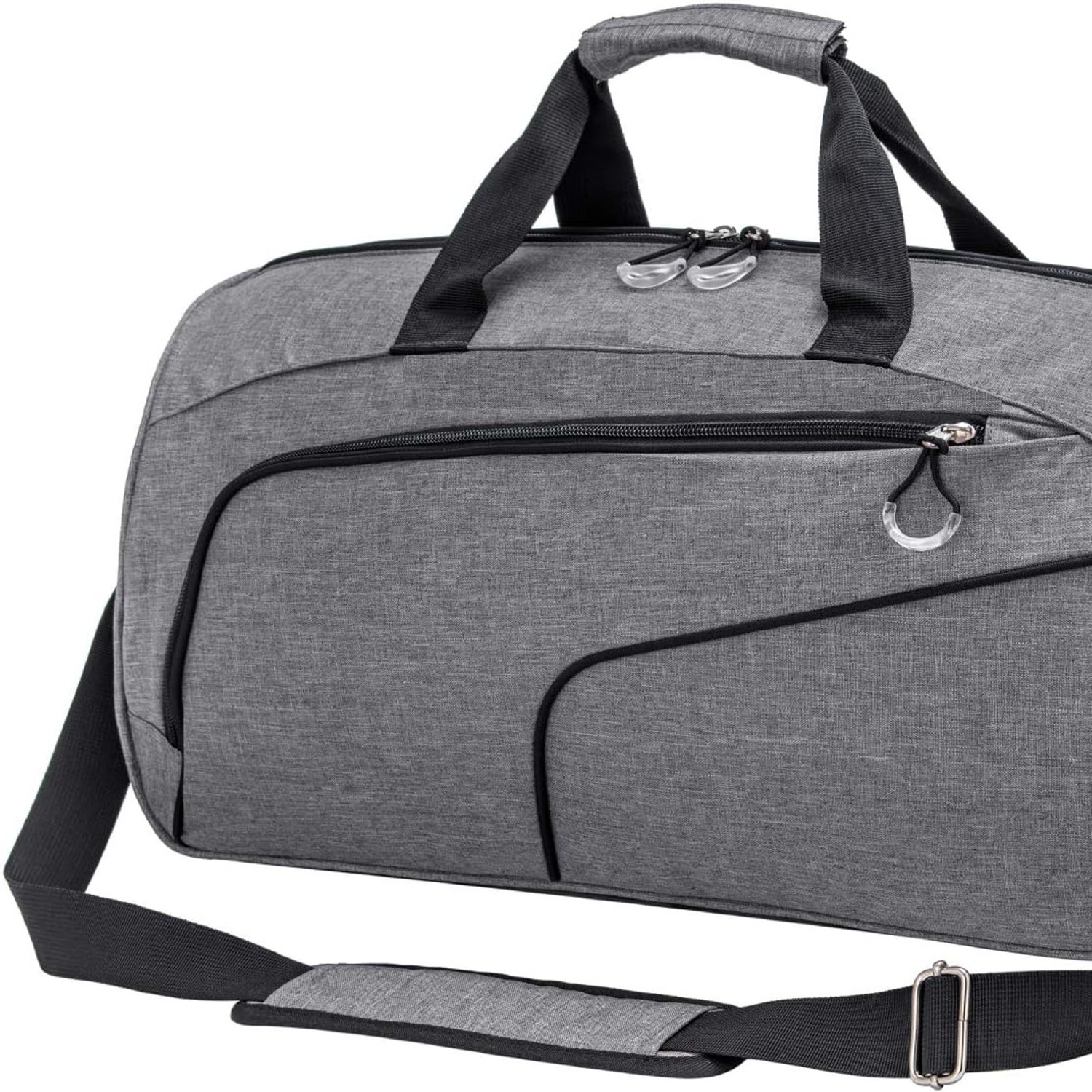
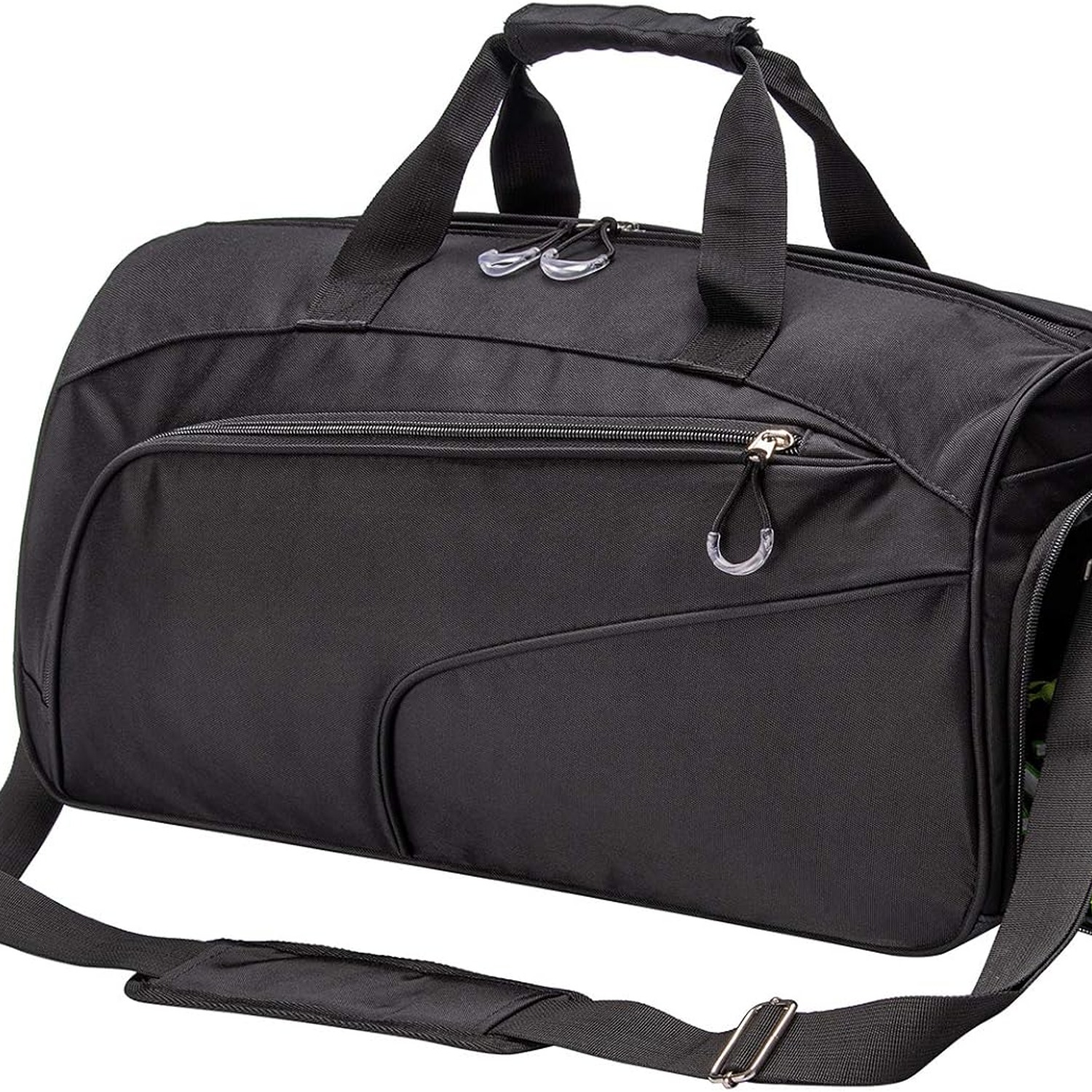
Grab handles and a shoulder strap do different jobs, and having both is more useful than people expect.
Handles are for short distances. Car boot to gym door. Front hall to taxi. They keep the bag tight to your side and give you precise control in a crowded space.
The shoulder strap takes over the moment you need both hands or the walk gets longer. Catching public transport, carrying a coffee, holding a child's hand: the strap is what makes those possible. It is also kinder on your grip if the bag is heavy.
One habit worth adopting: take the strap off when you are not using it. A dangling strap gets caught in locker doors, car seats and escalators. Clipping it off takes two seconds and the bag slides into tight spaces far more easily without it.
Packing it properly
There is a sensible order to packing any duffle, and it makes a bigger difference than the bag itself.
Put the heaviest items low and near the middle of the base. That keeps the weight close to your body and stops the bag swinging when you walk. A water bottle lying on its side at the bottom is better than one standing at the end.
Clothes go in flat layers rather than being balled up. Rolled clothes are fine too and often save a little room. Either way, the aim is to keep the main compartment opening wide, so you can see everything when you unzip it.
Small items need their own home. Keys, cards, earbuds and a charging cable will sink to the bottom of any open compartment. A small zip pouch inside solves this permanently and costs very little.
Shoes always go in the shoe section, even when they are clean. The moment you start making exceptions, the system breaks down and you are back to a mixed bag.
Keeping it in good condition
Soft bags last a long time if you treat the zips and the lining well.
Spot clean with a damp cloth and a small amount of mild detergent. Work on the mark rather than scrubbing the whole panel. Then let it air dry completely before storing, because packing a slightly damp bag away is how mildew starts.
Avoid the washing machine. It sounds convenient, but the agitation stresses stitching and can distort the shape of structured sections. Tumble dryers and bleach are worse. Neither is worth the risk on a bag you want to keep for years.
Air it out after every use. Unzip both compartments and leave them open while the bag sits at home. Ten minutes of airflow prevents most odour problems before they begin.
Zips deserve attention too. Never force one past a jam. Back it off, free the fabric caught in the teeth, then run it through smoothly. Most zip failures are really fabric snag failures that were pushed through once too often.
For storage, keep it loosely packed rather than crushed flat under heavy boxes. Stuffing a towel inside helps it hold shape if it will sit unused for a few months.
What the maker's description does and does not tell you
Being straight about this matters more than filling space with claims.
The maker's description confirms the brand is, the department is Unisex Adult, the manufacturer reference is 18, and the package dimensions are 34.01 x 24.99 x 5 cm. That last figure is the flat packed shipping measurement, not the open bag.
What is not specified by the maker: the fabric, the colour range, the finished internal capacity, the shipped weight and the country of origin. If any of those are decisive for you, particularly for a club or bulk purchase, ask before ordering rather than assuming. We would rather answer a question than process a return.
The short version
If your current bag puts shoes and clean clothes in the same space, this one solves that. The separate shoe compartment keeps the mess contained, the wide opening makes finding things fast, and having both handles and a strap means it works for short hops and longer walks.
Size wise, think one solid training session or one or two nights away. Big enough to be useful, small enough that you actually carry it rather than drag it.
Look after the zips, air it out after use, and spot clean rather than machine wash. Do that and a bag like this quietly does its job for years.